Damage is not the same as a leak. A ceiling stain can follow a seam, drain, or curb from the actual opening. We inspect the route, then name the failure and the repair boundary. Dry-in protects the building. The permanent fix comes after the roof is ready.
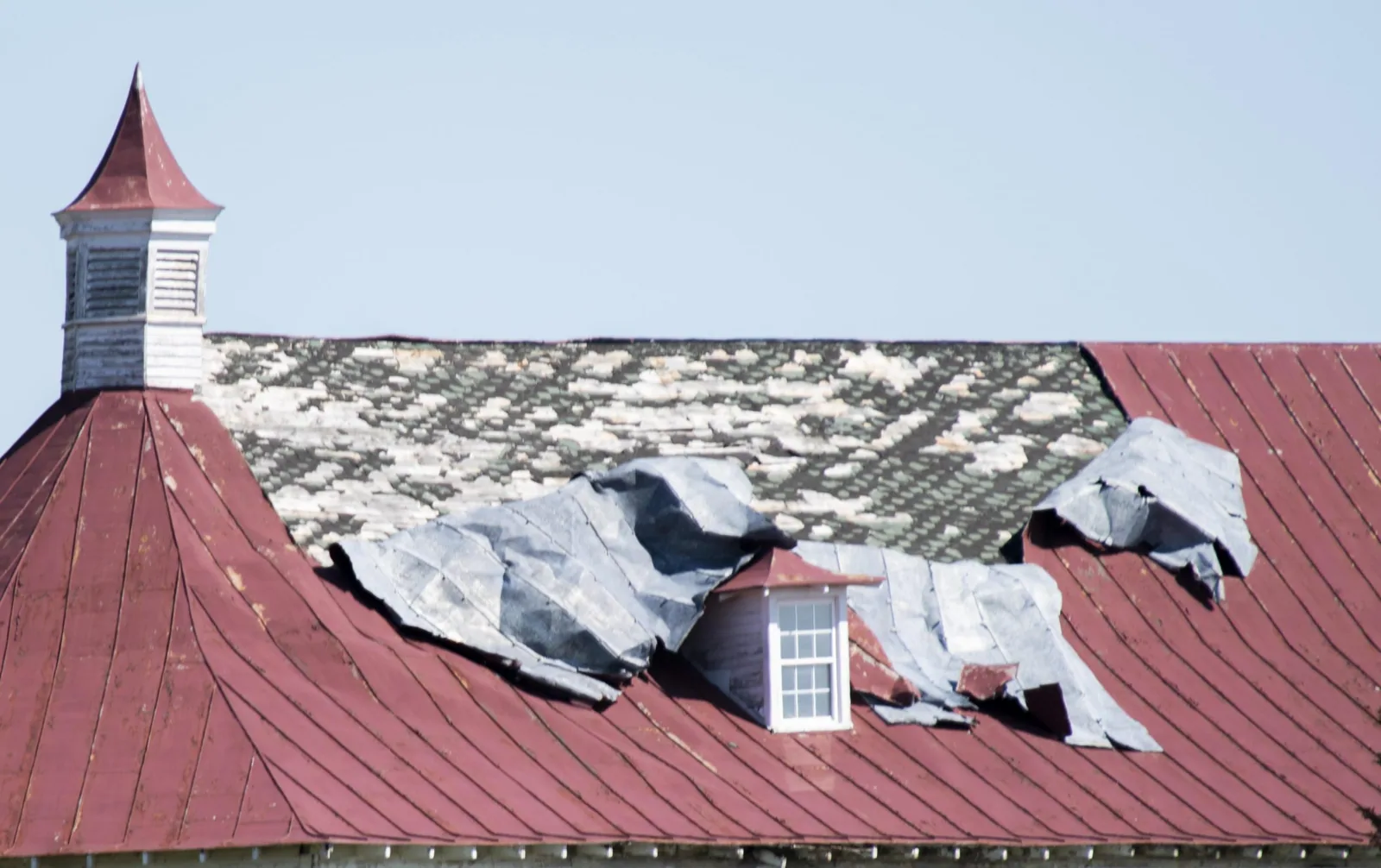
Wind works at corners, parapets, coping, and loose metal first. We check attachment and membrane termination before replacing a lifted section. A wind-damaged roof gets edge and perimeter attachment checked first. Where flashing has separated, flashing failure repair rebuilds the transition instead of sealing over movement.
Brockton averages 14.3 mph wind. After a nor'easter, an inspection should include newly exposed edges and roof penetrations, not only the place where water appeared. West-side buildings near Route 24 and properties along Route 28 through the city center still need the same roof-first diagnosis.
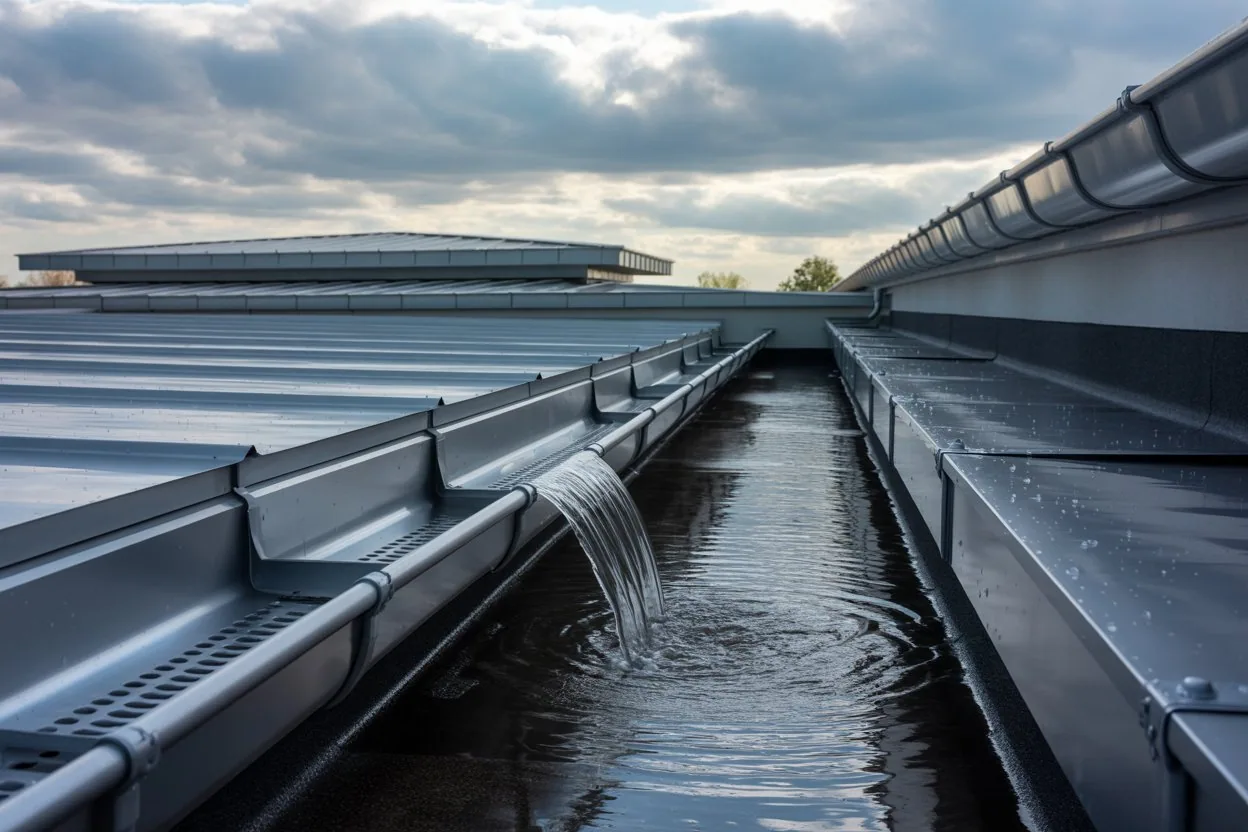
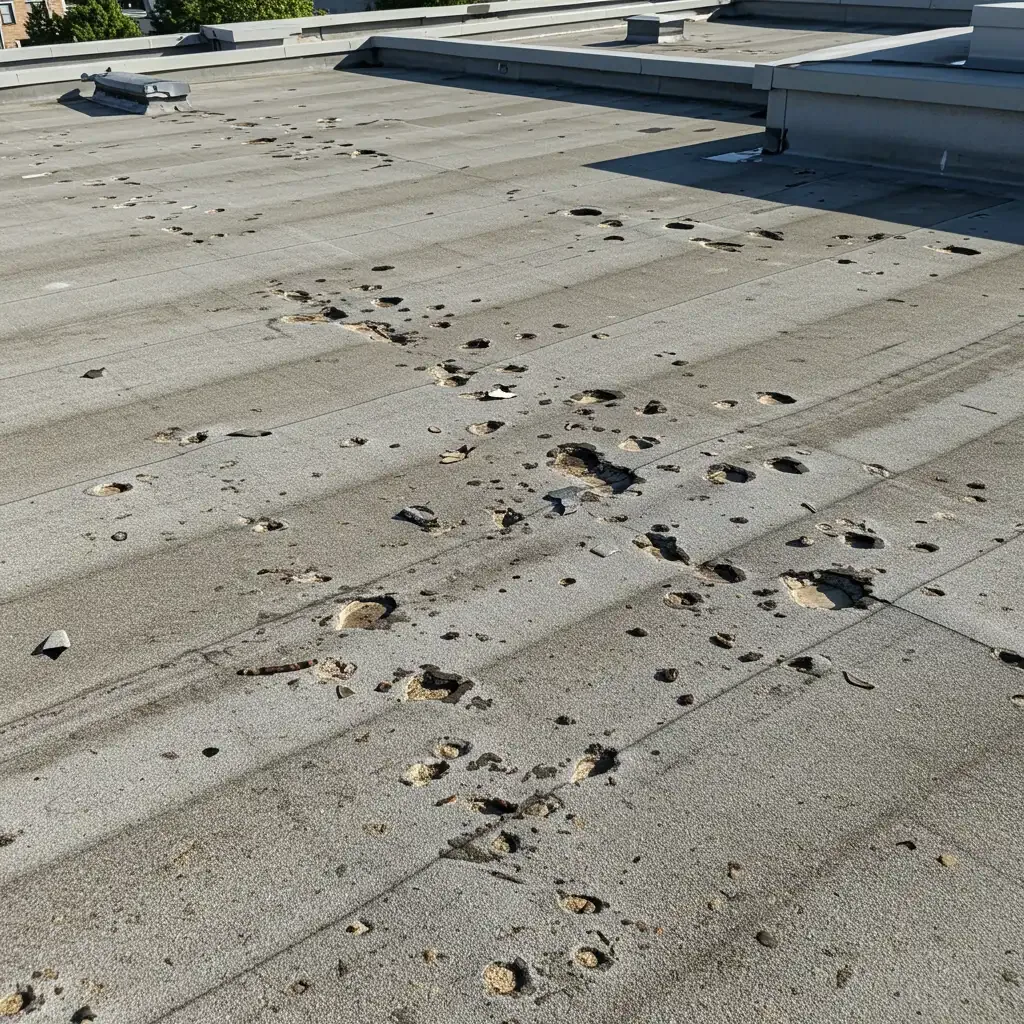
Ponded water can point to a blocked drain, a low deck, or a failed detail. We check the slope, outlet, and surrounding membrane. Ponding-water repair begins by finding which condition is holding the water. If a seam is open, seam failure repair follows the joint to bonded material. A puncture needs a compatible patch, not a broad sealant smear.
For a membrane puncture, we inspect nearby insulation and the interior path. Brockton's wet winters can keep a small opening active through repeated rain and snowmelt.
A typical Brockton year brings a little over 34 inches of snow, and annual precipitation is near 50 inches. February usually carries the highest monthly snowfall. Snowmelt tests drains and seams. A snow and ice damage check looks for blocked drainage, ice movement, and opened details. We do not price a replacement from weather history alone.
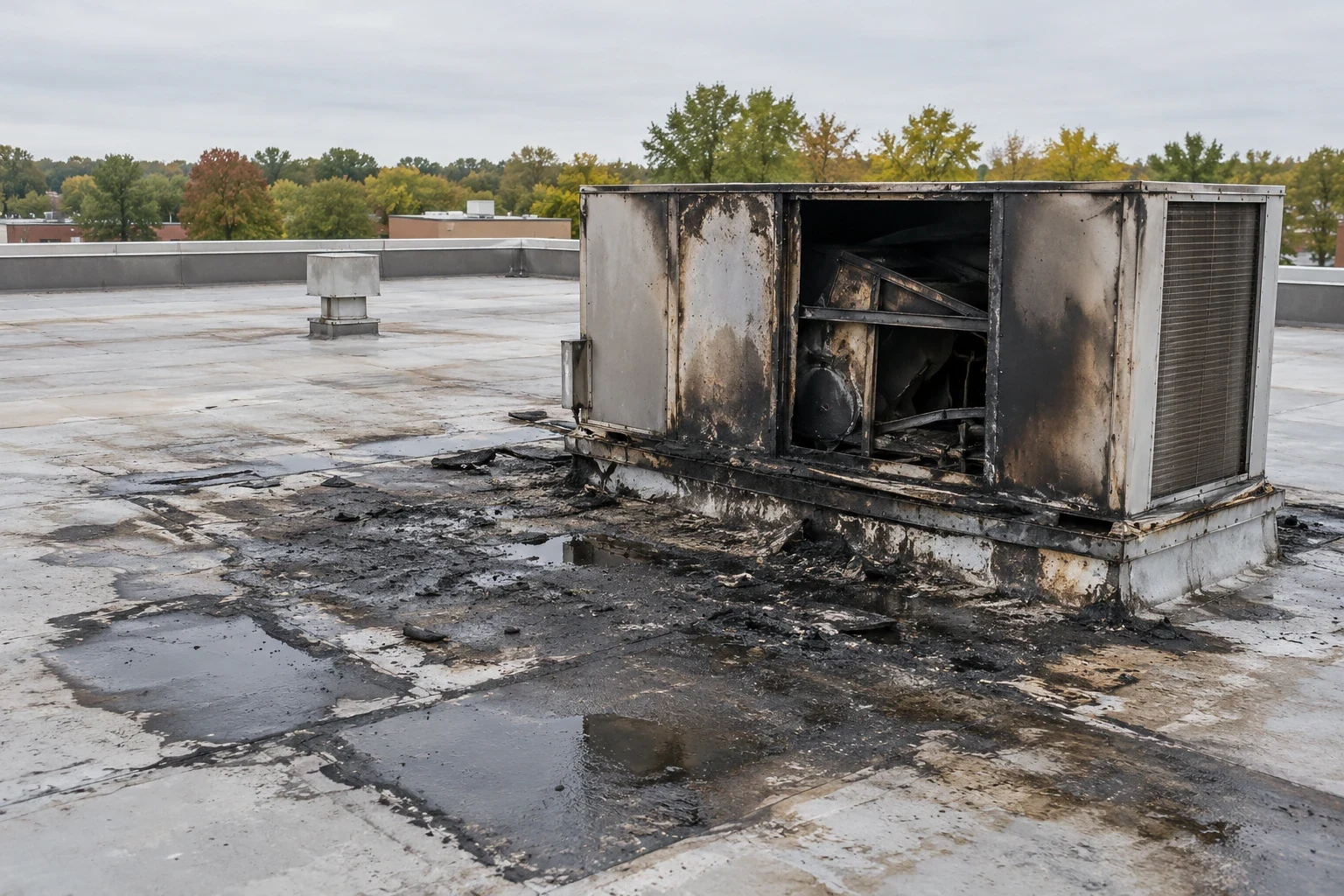
Fire is a separate case. A fire damage inspection checks heat-affected membrane, insulation, and deck before anyone rebuilds the system.
We record photos, damaged area, wet insulation, and temporary protection. Then we price repair, drying, or replacement if the condition supports it. For storm claims, storm damage documentation separates observed damage from existing wear. A dated image and brief damage timeline help guide inspection; we document what is new, what is wet, and where temporary protection is needed before discussing scope.
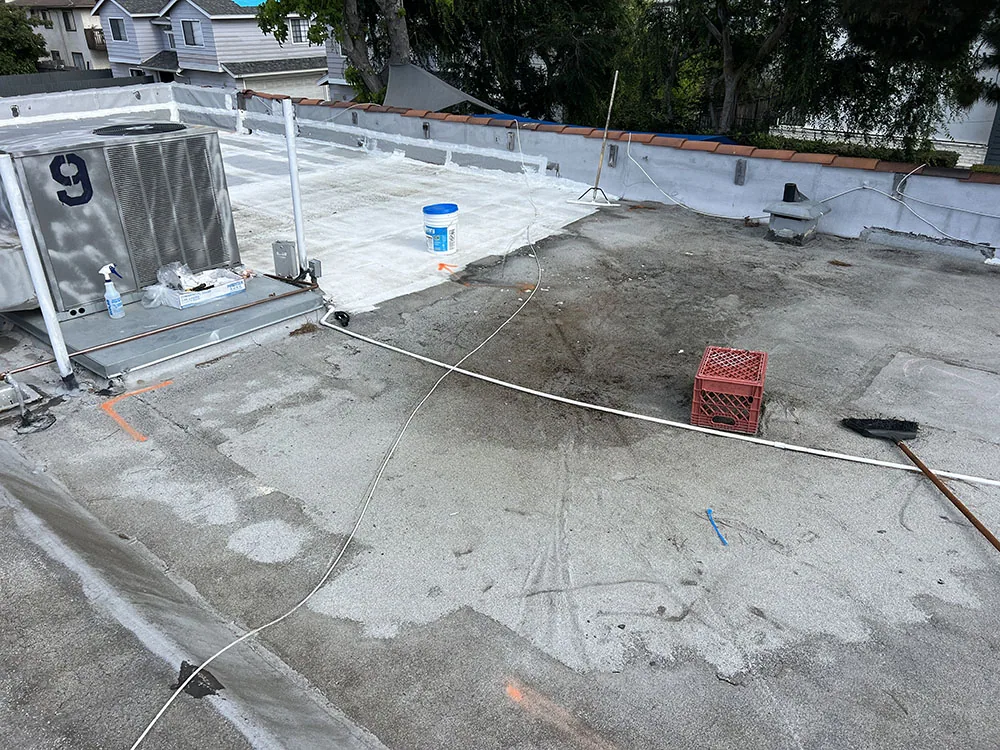
We can protect an active opening when conditions permit. A permanent patch needs a safe, prepared surface. We separate the immediate dry-in from the lasting repair.
No. We check drainage, slope, and the condition around the outlet. The repair depends on whether water is held by debris, a low area, or a failed membrane detail.
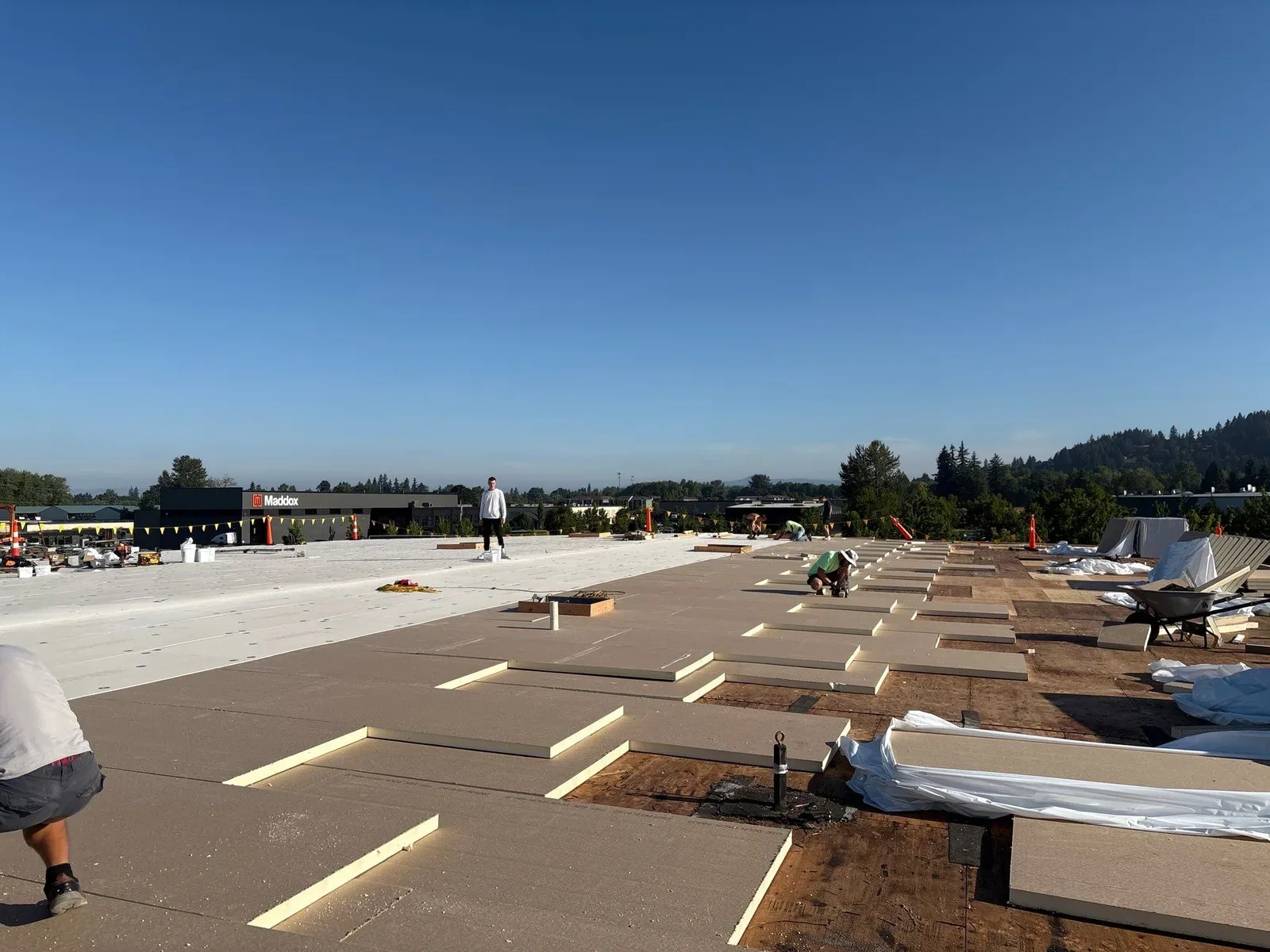
We identify the wet area and remove material that cannot be dried or retained. A core cut can confirm the layers before the estimate includes replacement board.
Send the address, storm or leak date, and a photo of the worst spot. We will plan access and inspect the surrounding roof details.
©2026 Commercial Roofing Brockton. All rights reserved. Privacy Policy | Terms
Call now555-555-5555